
When Luxury Hits the Beach
Vamos LouBouBou
I wasn’t looking for an editorial. I was looking for a pair of flip-flops. Five minutes later I was questioning the economics of luxury, admiring the design, remembering product experiments from twenty years ago, and sketching ideas for a sandal collection of my own.
Ideas rarely arrive politely. They usually arrive arguing with you.
That argument began with a pair of Christian Louboutin rubber flip-flops carrying a price tag of more than $400. My first reaction was predictable. “This is absurd.” My second reaction surprised me. “They’re actually quite cool.”
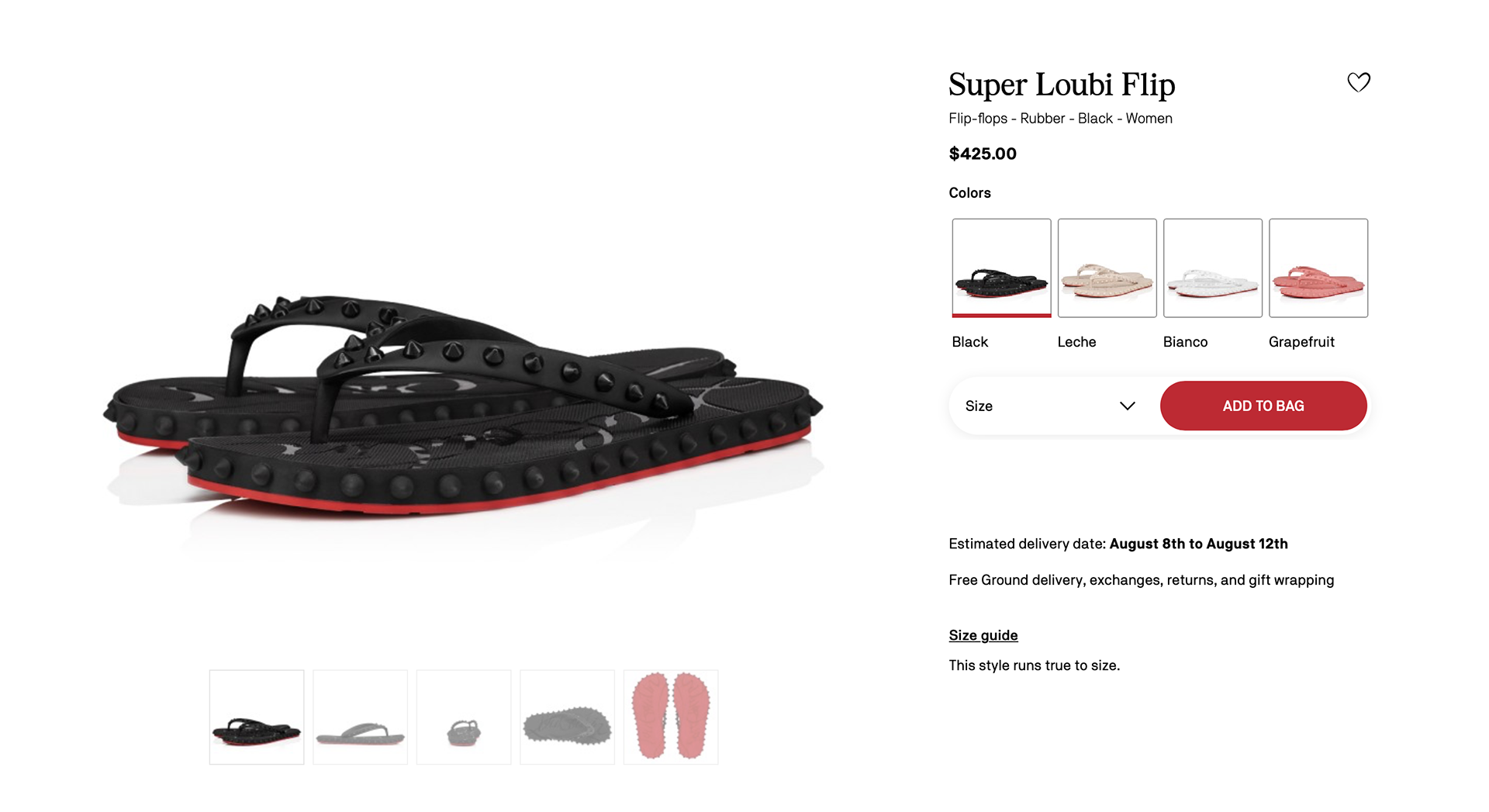
Luxury spent a century convincing us to climb into stilettos. Now it charges $425 to climb back into flip-flops.
That’s the fascinating thing about luxury. It bypasses rationality and goes straight to desire. If people bought these because the rubber was objectively better, Christian Louboutin would be competing with Havaianas.
They aren’t buying rubber. They’re buying participation in a story. That distinction explains far more about modern luxury than any balance sheet ever could.
The Most Democratic Shoe on Earth
The flip-flop occupies the absolute bottom of fashion’s hierarchy. It’s the shoe of beaches, swimming pools, hostels, backpackers, gardeners, and convenience stores. It asks almost nothing of its owner. It doesn’t promise status. It promises comfort. Or at least it used to.
Luxury has spent the last two decades performing a remarkable reversal.
Sneakers became luxury. Hoodies became luxury. T-shirts became luxury. Baseball caps became luxury. Now even the humble flip-flop has crossed the velvet rope.
Luxury spent a century climbing upward. Now it’s charging hundreds of dollars to climb back down. That sounds absurd. So does the product. Yet both are true.
The Story Is Worth More Than the Rubber
Ironically, I don’t dislike the sandal at all. Quite the opposite. It’s an intelligent piece of design.
Rubber is inexpensive. Injection molding is inexpensive. Metal studs cost very little. The tooling probably represents the largest investment. None of that matters.
Someone looked at one of the simplest products ever invented and asked a wonderfully uncomfortable question: Why should only leather have a monopoly on luxury?
That’s good design thinking. The real innovation isn’t the sandal. It’s convincing the market that a beach flip-flop deserves the same psychological shelf space as a CHANEL bag. That isn’t manufacturing. That’s mythology.
Luxury’s New Currency
For generations, luxury justified itself through craftsmanship, rarity, and precious materials. Those things still matter. But they’re no longer enough. Today, luxury increasingly creates value by changing how we perceive ordinary objects. The material remains ordinary. The meaning becomes extraordinary.
A rubber sandal doesn’t become expensive because rubber improved. It becomes expensive because attention became scarce. In an economy where almost everything can be copied, manufactured, or delivered tomorrow, perception has become the most valuable raw material of all.
Perhaps branding has quietly become applied mythology.
From Louboutin to LouBouBou
Luxury brands spend decades building immaculate worlds. Consumers dismantle them in a weekend. Within minutes, I had already renamed the sandal: LouBouBou.
Labubu. Different product. Same mechanics. Hype, scarcity, collectability, and a price that somehow becomes part of the entertainment.
That's the pattern.
Luxury Is a Conversation
This little encounter reminded me why I find luxury endlessly fascinating.
I can question the economics. Admire the design. Laugh at the mythology. Respect the branding. And still walk away inspired. The best products don’t simply ask whether you’ll buy them. They ask whether they’ll change the way you see the world.
Sometimes they even send you back to the drawing board. Ten years ago I experimented with rubber combined with metal details for accessories. Looking at these sandals brought those memories rushing back.
Somewhere between ridiculous and brilliant is usually where the next idea is waiting. The beach hasn’t changed. Only the admission price has.
Vamos a la playa.