
FASHION IN DISTRESS
The industry has learned to sell rebellion. Some designers still insist on causing trouble.
Two Ways to Dress for the Future
Two images from Paris make an uncomfortable pair. In one, a fashion-week attendee dresses to be seen. In the other, students gather to be heard. Both understand that appearance matters; only one group can reasonably expect its appearance to be treated as an achievement.
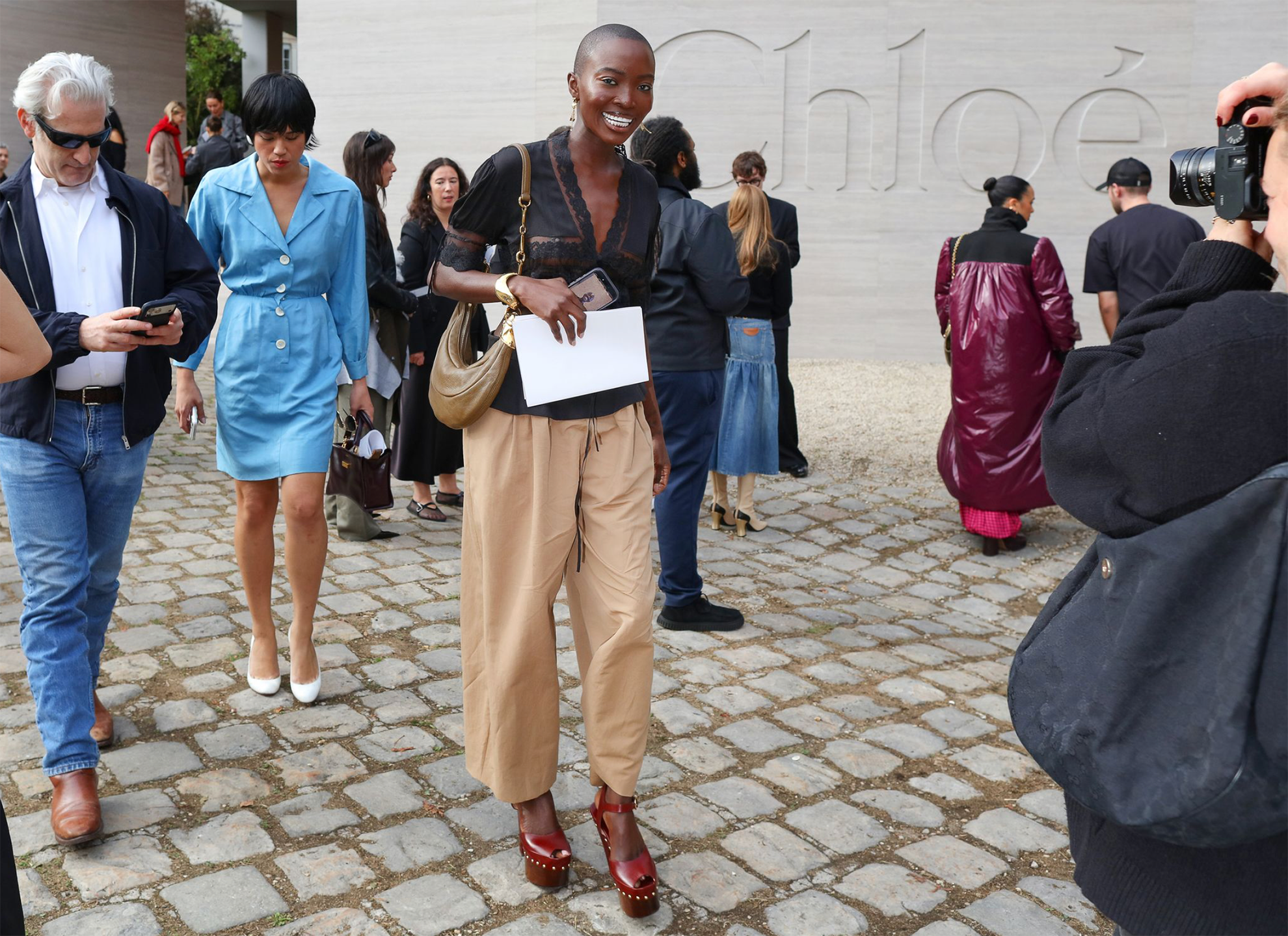
Paris, almost simultaneously: Another vision of the future, with fewer invitations and considerably more at stake.
During the Spring/Summer 2027 shows, Saint Laurent sent gold beneath the Eiffel Tower, while Alessandro Michele brought Valentino into the Bibliothèque Sainte-Geneviève. Outside fashion’s arrangements, French students were protesting overcrowded classrooms, missing teachers and deteriorating schools; demonstrations were met with tear gas and arrests. Fashion had prepared next summer. Some of the teenagers were still trying to secure this autumn.
The temptation is to pronounce the whole thing obscene. But having spent much of my life in fashion, photography, publishing and design, I would be lying if I pretended that beautiful clothes suddenly become worthless when the world becomes ugly. People need pleasure, invention and the possibility of becoming someone they have not yet imagined. A dress does not have to repair a school to justify its existence.
What bothers me is the growing sense that fashion wants credit for understanding the world while arranging everything so that the world cannot interrupt it. There is a difference between giving people somewhere to dream and asking them to admire how efficiently you have avoided waking up.
The Safety Pin Passed Compliance
At ELASTE, post-punk and New Wave mattered to us because they opened possibilities. You could make a magazine, put a band together, invent an appearance, announce yourself before anyone had decided whether you deserved an audience. The clothes belonged to that larger permission to do things differently.
That is what gets lost when rebellion is reduced to its wardrobe. In the work of Vivienne Westwood, a safety pin could carry an insult to respectable taste. On a luxury accessory, it can carry an excellent margin. The object survives the journey beautifully; the attitude travels less well.
Of course punk was never outside commerce, and being young in the past did not make everyone interesting. The point is that something happened between making an appearance that challenged the terms of belonging and buying an appearance that certifies your membership. Luxury has become particularly skilled at selling the second with the language of the first.
Now collections arrive accompanied by resistance, community, identity and change. These words should make demands on the clothes and on the people producing them. Too often they merely make the press release harder to disagree with. Who wants to be against community?
This is where the distress lives: in the suspicion that fashion has become better at describing its importance than demonstrating it. Yet dismissing every collection before looking at it would be its own kind of laziness. And this season, two designers make that dismissal considerably harder.
Someone Brought the Billionaires
Hannah Rose Dalton and Steven Raj Bhaskaran call their label Matières Fécales: Fecal Matter in French. Their severe tailoring, altered bodies and unsettling beauty have made them conspicuous in an industry that routinely promises difference and then hires the same faces to demonstrate it. Their Fall 2026 collection, The One Percent, aimed its satire at extreme wealth.
For Spring/Summer 2027, they turned towards the other end of that arrangement. The 99% brought 99 models of colour beneath the Monument à la République, with clothing that included distressed tailoring and sari textiles shaped into couture volumes. In the finale, models carried lifelike figures representing billionaires on their backs.
An economic argument, with the weight distributed accurately.
It is theatre, obviously. But theatre can make a relationship visible that polite language keeps obscuring. Those bodies carrying those figures offer a much less flattering picture of wealth than luxury’s usual suggestion that everyone at the top simply climbed there in better shoes. The image asks who is doing the carrying.
The clothes deserve attention too. A silhouette can make a body appear powerful, strange, vulnerable or impossible to classify. When designers work seriously with those possibilities, the argument enters the garment rather than remaining something written beside it. Matières Fécales’ distorted elegance is compelling because its unease does not depend entirely on knowing the show’s title.
There is also a human consequence to casting. AnOther’s interview with the casting directors describes a closing model breaking down with happiness afterwards. That does not redistribute wealth, but it does complicate the claim that everything visible on a runway is empty. Being seen can matter enormously to someone accustomed to being excluded.
The teenagers protesting for better schools and the people walking this show are not interchangeable, and a runway cannot borrow the authority of a demonstration simply by occupying a public square. Still, here was fashion allowing the question of who belongs to disturb its picture of beauty. That deserves more than a cynical shrug.
The Trouble Came with a Production Budget
The backing matters. Matières Fécales is supported by Dover Street Market Paris under Adrian Joffe, president of Comme des Garçons International. That support includes development and production, giving the designers access to resources they previously lacked. This is more interesting than the familiar story of a corporation discovering that outsiders are fashionable.
Rei Kawakubo and Yohji Yamamoto made their Paris debuts in 1981, challenging established ideas of how clothes should fit, flatter and present the body. Their work could be spectacular, but the challenge existed in the construction: asymmetry, unexpected volume, space between cloth and skin. You could take away the runway and still have to confront the proposition.
That is a useful inheritance. Fashion does not become radical because a model looks angry or the soundtrack suggests the end of civilisation. It becomes radical when the clothes alter what people can imagine wearing, how a body can occupy space, or whose body is allowed to count as beautiful.
Joffe’s support suggests that an institution can do more than extract the attractive surface of dissent. It can also supply the factories, skilled labour and distribution that allow an idea to become an actual garment. Whether that possibility survives commercial pressure is an ongoing question, but declaring it dead in advance would erase precisely the distinction this industry needs.
Even the name deserves care. Dalton traces the French-language joke to the label’s origins. We should be wary of treating it as evidence of surrender. The shit has not disappeared. It has acquired an accent.
Selling Out Is Not the Same as Selling Clothes
There is an easy ending available: luxury absorbs its critics, the clothes sell, therefore the criticism was always another product. It is tidy, devastating and almost impossible for any working designer to escape. Fail commercially and your ideas were irrelevant; succeed and you have betrayed them. A wonderful arrangement for critics, less useful for anyone paying a pattern cutter.
WWD reported first-season sell-through of 70–80% in a number of stores, according to the brand. Those figures tell us that people bought the clothes. They cannot tell us whether buyers accepted the social commentary, ignored it or simply liked the jacket. A sales report is a poor instrument for measuring conviction.
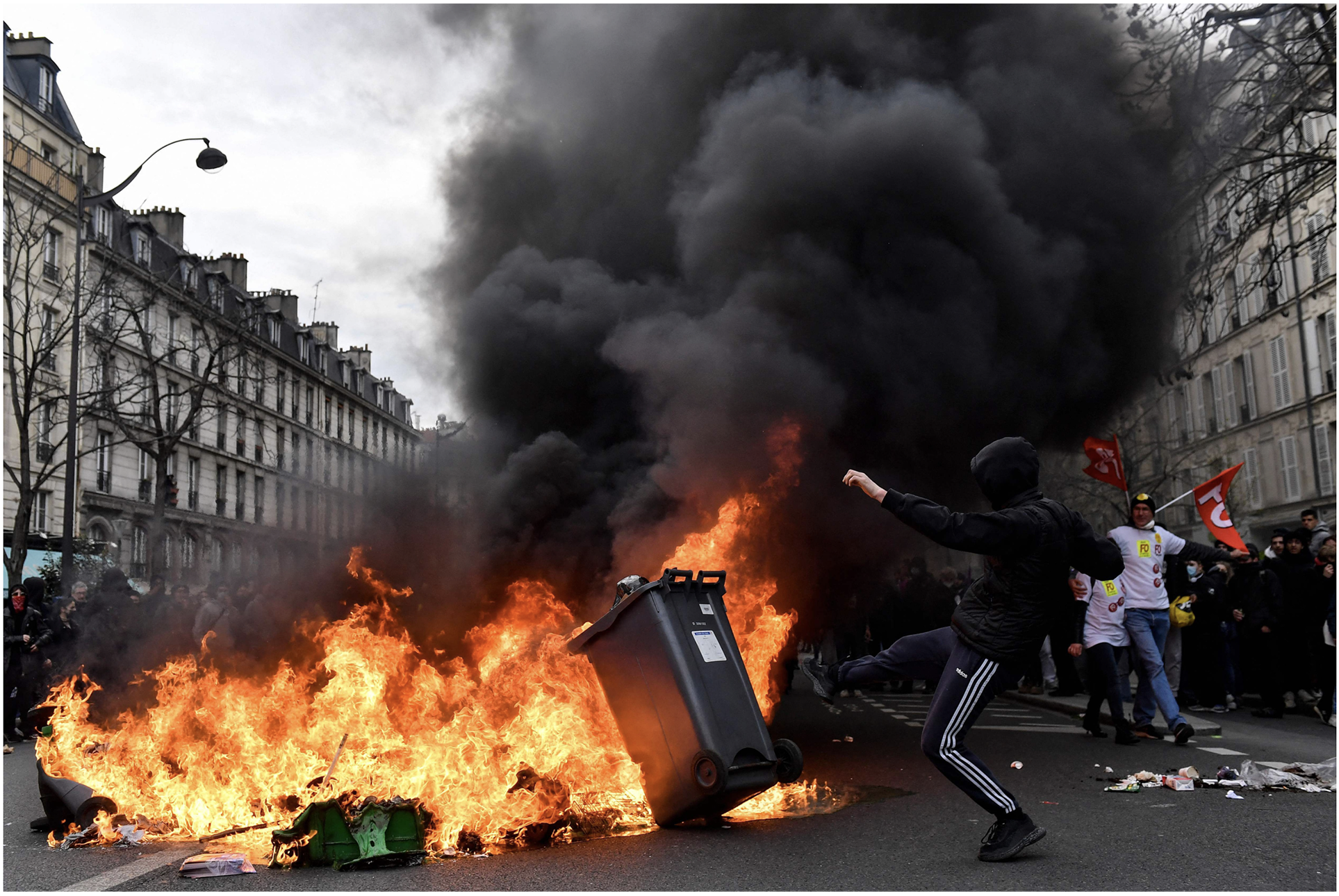
Paris, almost simultaneously: Another vision of the future, with fewer invitations and considerably more at stake.
The uncomfortable questions remain. Who can afford this rebellion? Can the people represented on the runway afford the objects representing them? How readily can a wealthy customer buy a critique of wealth and experience the purchase as proof of personal sophistication? Luxury has always offered ways to feel exceptional; moral exception can become another one.
But requiring designers to remain poor before taking their ideas seriously would turn hardship into our preferred aesthetic. The more useful test is what success permits them to do, and what it eventually persuades them to stop doing. Does the work become stranger, more exacting, more open to people previously excluded? Or does the troubling part slowly disappear while the recognisable look remains?
Fashion in distress is still capable of producing fashion that disturbs. That is the distinction worth keeping alive. The problem is the commercial comfort of an industry that can surround itself with urgent language while expecting very little urgency from its own behaviour.
I still want to see clothes that make me feel something beyond the wish to own them: curiosity, discomfort, recognition, the sudden pleasure of discovering that somebody has seen a possibility I missed. Matières Fécales does not settle the argument. It gives us a reason to keep looking.
Paris can accommodate a beautiful show and a difficult question. What fashion cannot afford is to keep mistaking the first for an answer to the second.