
THANKS, BOSS!
Bernard Arnault, LVMH and the Fine Art of Knowing Nothing
Bernard Arnault is the man behind Louis Vuitton, Dior, Tiffany & Co. and dozens of other luxury brands whose names are considerably more familiar than his own—a useful arrangement for someone whose business involves making everybody else conspicuous. As chairman and chief executive of LVMH, the French luxury conglomerate, he presides over an empire selling everything from handbags to champagne, supplying both the evidence that you have arrived and something to drink when you get there.
A Small Return on Investment
In Merci Patron!, François Ruffin approaches this titan of cultivated aspiration with the enthusiasm of a man determined to appreciate his betters. There are dividends to celebrate, a clothes dryer bought with the proceeds, and a perfectly sincere mission to reconcile the billionaire with the people whose livelihoods have rather inconveniently disappeared along his route to greatness.
It is a touching ambition. France has spent centuries trying to reconcile the people with their rulers, with mixed results for the rulers’ necks. Ruffin brings a camera.
His 2016 documentary centres on Jocelyne and Serge Klur, former workers at a supplier making Kenzo clothing, whose jobs vanished when production moved abroad. Their predicament supplies the human scale missing from the usual Arnault profile: two people struggling to keep their home while the man at the summit of the commercial ecosystem becomes an international monument to success.
The film’s title translates as Thanks, Boss! Gratitude, delivered with sufficient conviction, can become a devastating form of criticism.
Saving the Valuable Parts
Arnault’s ascent through luxury began with the distressed Boussac empire, acquired in 1984 with the support of France’s Socialist authorities. Among its industrial problems sat a particularly attractive asset: Christian Dior.
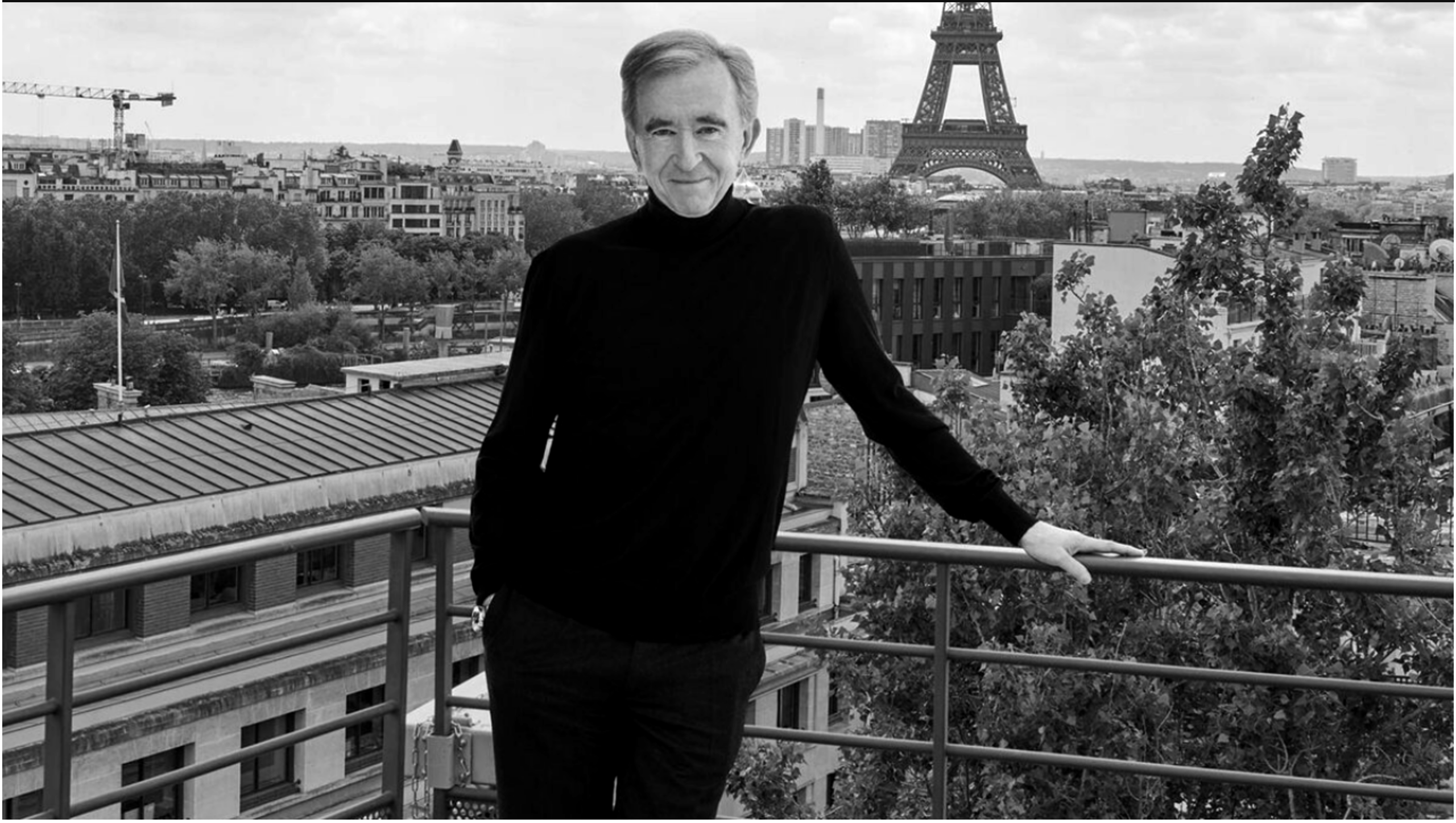
Musk can keep the crown; Bernard has the champagne, the maisons and the Paris addresses. If your fortune must fluctuate, it might as well do so in excellent taste.
Arnault spoke of limiting the damage to employment. Thousands of jobs subsequently disappeared as businesses were reorganised and sold. Dior survived to become a cornerstone of his fortune.
A difficult rescue, certainly. Though from the workers’ perspective, the distinction between being rescued and being removed from the balance sheet may have required clarification.
Here was a template for the coming age: the value of an enterprise could be liberated from the people who depended on it. The brand retained its history; the employees acquired one.
Today, luxury sells heritage with extraordinary tenderness. Every stitch has ancestors. Every trunk remembers a voyage. An old workshop can sustain several paragraphs of reverence, provided its history concludes with something expensive still available to buy.
The history of a closed factory is harder to merchandise.
Seventy-Five Ways to Be Unique
LVMH presents its maisons as distinctive creative worlds, united by exceptional craftsmanship. Its decentralised structure is real: the houses have their own identities, teams and considerable operational autonomy. Above them sits the power of a common owner, allocating capital and assembling an extraordinary portfolio of desirable names.
This is Arnault’s achievement. He understood how to organise the commercial exploitation of uniqueness on an industrial scale.
There is real talent inside that machine: designers, leatherworkers, perfumers, jewellers. Their skill gives the promise substance. The financial genius lies in making their work carry an additional charge for belonging, recognition and the possibility of being mistaken for someone with a better life.
A handbag becomes a small, portable answer to a large social question: where do I stand?
When status feels insecure, the answer can become very expensive.
Which makes luxury an unusually elegant participant in an unequal economy. It sells visible distance from insecurity to people who may still be living quite close to it.
The queue outside the boutique and the anxiety about next month’s bills can belong to the same person.
Made in Italy, Priced in Heaven
In 2024, the distance between luxury’s promise and its production became awkwardly measurable. Italian investigators examining Dior’s supply chain described exploitative conditions at subcontractors. Court documents cited a €53 payment for assembling a bag sold in shops for €2,600.
Those figures deserve precision. The €53 was a subcontracting charge, excluding materials and the wider costs of design, distribution and retail; it was never a calculation of Dior’s net profit. Dior said the suppliers performed partial assembly, rejected misleading claims about its margins and cut ties with them.
Even after the accounting is corrected, a question remains: what ethical assurance has the customer actually purchased?
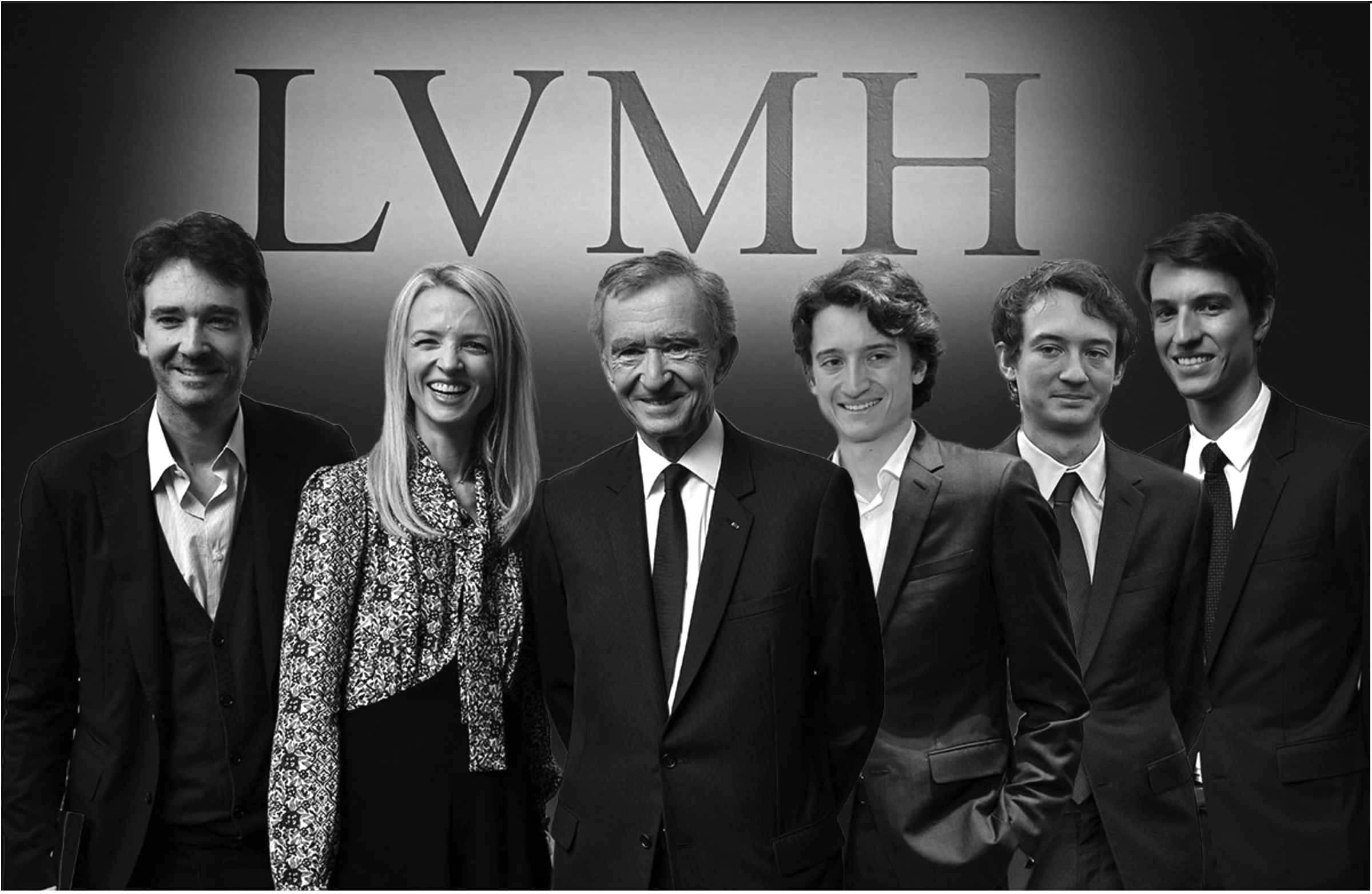
Five children, one empire, and the remarkable discovery that the best candidates were already on the Christmas card. Equal opportunity begins at home.
The luxury premium comes wrapped in stories about care. It invites us to believe that exceptional attention travels all the way through the object. Discovering that attention may become less exceptional at the workshop door rather spoils the unboxing.
The Italian subsidiary was placed under court administration. That oversight ended early in February 2025 after the court approved stronger controls. A separate consumer-protection investigation closed in May with binding commitments and no finding of infringement.
Credit where it is due: improvements followed.
It is simply encouraging to discover that an industry capable of tracing a creative inspiration to an eighteenth-century garden can, with judicial assistance, also trace its subcontractors.
The Security Department Enjoyed the Film
Ruffin’s documentary attracted another kind of attention.
In March 2025, former French intelligence chief Bernard Squarcini was convicted of offences including using public resources to benefit LVMH and complicity in the illegal surveillance of Ruffin and his newspaper, Fakir. His lawyers announced an appeal.
LVMH had already paid €10 million in 2021 to settle the related criminal investigation. The agreement entailed no admission of guilt or criminal conviction of the company. Arnault appeared at Squarcini’s trial as a witness, denied knowing about the surveillance and was not a defendant.
We should receive that denial with the respect due to sworn testimony.
We may also contemplate the organisational mystery. The public story of LVMH celebrates a leader of exceptional strategic command. The surveillance story introduces a more distant figure, unaware of activities undertaken for the group’s benefit.
An empire can apparently be sufficiently coherent to express one man’s vision and sufficiently dispersed to leave him uninformed about some of its methods.
This is the fine art of knowing nothing: a problem of corporate accountability that survives regardless of what any individual can be proved to have known.
For a company selling dreams, the interest in a filmmaker was nevertheless rather intense. Ruffin had managed to produce the one form of attention luxury rarely commissions.
The News Comes Beautifully Wrapped
Fortunately, criticism can also be encountered through more conventional channels.
LVMH’s expanding media holdings include Les Échos, Le Parisien, L’Opinion, L’Agefi and Challenges. Journalists’ unions and Reporters Without Borders have challenged the concentration of ownership and demanded stronger protections for independence; Challenges journalists went on strike in April 2026.
One should avoid the lazy suggestion that every journalist takes instructions from an owner. The structural problem is more durable: a major subject of economic reporting acquires increasing power over the institutions doing the reporting.
Rupert Murdoch built his influence through a media empire whose politics rarely require decoding. Arnault’s power begins somewhere more seductive: taste, aspiration and the authority to decide what a successful life should look like. By adding economic newspapers to his collection, the man selling that vision increasingly owns the places where its benefits are explained and its costs debated. Murdoch’s influence comes with an editorial line; Arnault’s comes wrapped in cashmere and calls itself savoir-faire.
Advertising supplies another instrument. In 2012, LVMH advertising was withdrawn from Libération after its insulting front page about Arnault’s Belgian citizenship application.
Editorial freedom may remain intact while the advertising budget exercises its own freedom to leave.
For readers, the difficulty is knowing how much pressure ever needs to become an explicit instruction. Ownership and commercial dependence can establish the atmosphere long before anyone edits a sentence.
Even the air conditioning has a proprietor.
Please Tighten Your Belts
Outside this carefully managed atmosphere, France has been demonstrating.
On October 24, the Interior Ministry counted 410,000 protesters nationwide; the CGT estimated nearly 800,000. A movement that began over school staffing and funding has widened into anger about living costs and inequality. Clashes and arrests have accompanied the demonstrations.
Those grievances bring Arnault’s world into sharper focus. A country capable of producing extraordinary private fortunes finds itself arguing about the resources required to educate its children.
The protesters have their varied demands and politics. Arnault did not personally create every fiscal problem in France. But his position in the argument is revealing.
In September 2025, he attacked Gabriel Zucman’s proposed minimum wealth tax targeting fortunes above €100 million, presenting it as a danger to the French economy.
The proposal’s supporters saw a question of contribution. Arnault saw a threat to prosperity. It is a familiar dispute over who may be asked to sacrifice, and who must first be reassured.
This summer supplied a particularly French complication: an administrative court ruling assessing Arnault and his wife roughly €22.5 million in additional taxes and related charges. The dispute concerns the tax treatment of money received from a Belgian holding company; his representative said he would appeal.
A tax dispute is no criminal conviction. It does, however, add texture to a national conversation about whose finances require discipline.
LVMH pays substantial taxes and employs many people; its economic contribution is real. That contribution deserves recognition. It also brings us to an extraordinary modern expectation: gratitude for successful enterprise should apparently settle the terms on which its owners participate in society.
Thanks, Boss! begins to sound less like a film title and more like a proposed social contract.
Neoliberalism, With Complimentary Gift Wrapping
The economist Richard J. Murphy, in the video that prompted this wider reflection, describes the French conflict as a confrontation between the demands of financial capital and ordinary people’s needs.
His announcement of neoliberalism’s demise may be premature. Systems organised around powerful interests are remarkably good at surviving their own obituaries.
But his underlying question belongs here: what is the economy being asked to accomplish, and for whom?
Arnault makes an unusually vivid figure through whom to examine it. His empire depends on culture, skilled labor, public institutions, and a stable society. Its rewards accumulate through ownership. Meanwhile, the cost of maintaining the shared foundations of prosperity becomes an argument about what the country can afford.
The state remains useful as a provider of infrastructure, protection and cultural prestige. Its requests for a larger contribution encounter a more demanding review process.
Luxury adds its own twist. Inequality supplies both the fortunes at the top and the desire to display proximity to them. The consumer buys a symbol of arrival; the owner collects a return on the journey.
This does not make the customer foolish. The wish for beauty, pleasure or recognition is human. The commercial accomplishment is teaching people to express those wishes through objects whose prices advertise the distance between them.
The bag holds your belongings. The business model holds your aspirations.
Five Outstanding Candidates
Happily, the future of this meritocracy has received careful consideration.
All five of Arnault’s children hold senior roles within the group. Their preparation has included monthly working lunches with their father. In July 2026, Arnault dismissed reports of bitter family rivalry and insisted that the family remained united.
We should wish them well. Family lunches are difficult enough without a luxury empire between the bread and the butter.
Their competence can be assessed on its merits. The opportunity to demonstrate it has, however, been distributed with impressive biological consistency.
Luxury calls this continuity. Elsewhere, young people are invited to call their insecurity a challenge and improve their personal brand.
Both generations are preparing for the future. Only one has been allowed to acquire it in advance.
Merci, Patron
Ruffin’s film ends with a victory. By making their story a potential embarrassment for LVMH, the Klurs obtain compensation and a job for Serge.
The comedy works because the people are never the joke. Their need is ordinary; the machinery they must activate to have it recognised is absurd.
They have to become a reputational problem before they become a solvable human one.
That is what connects their dining room to the streets of France today. People are asking how to make their needs count in a system exquisitely responsive to the protection of wealth and considerably harder to impress with hardship.
Arnault’s defenders can point to brands preserved, jobs created, taxes paid and beauty brought into the world. Those achievements belong in the picture. So do the workers, the suppliers and the public institutions on which the picture depends.
The problem begins when the gratitude is expected to travel in only one direction.
Thanks, Boss.
We were hoping for a society. The gift wrapping is lovely.