
WHEN DID DRESSING WELL BECOME A RADICAL ACT?
How comfort became a uniform—and making an effort became an embarrassment.
“Why are you so dressed up?”
It is a peculiar question to ask someone who has simply put on a good jacket. There is no wedding, job interview, or pending prosecution. You are going to dinner, and you thought you might enjoy looking good. Apparently, this requires an explanation. Arriving in something you could comfortably sleep in rarely does.
Somewhere in our liberation from dress codes, making an effort became faintly embarrassing. We gained the freedom to wear almost anything, then developed a remarkable preference for clothes suitable for doing almost nothing. The modern outfit accommodates a canceled flight, an unexpected nap, and exercise that remains hypothetical. It can travel from sofa to restaurant without any visible acknowledgment that the circumstances have changed. The restaurant has spent months considering the lighting; its customer has apparently considered getting back into bed.
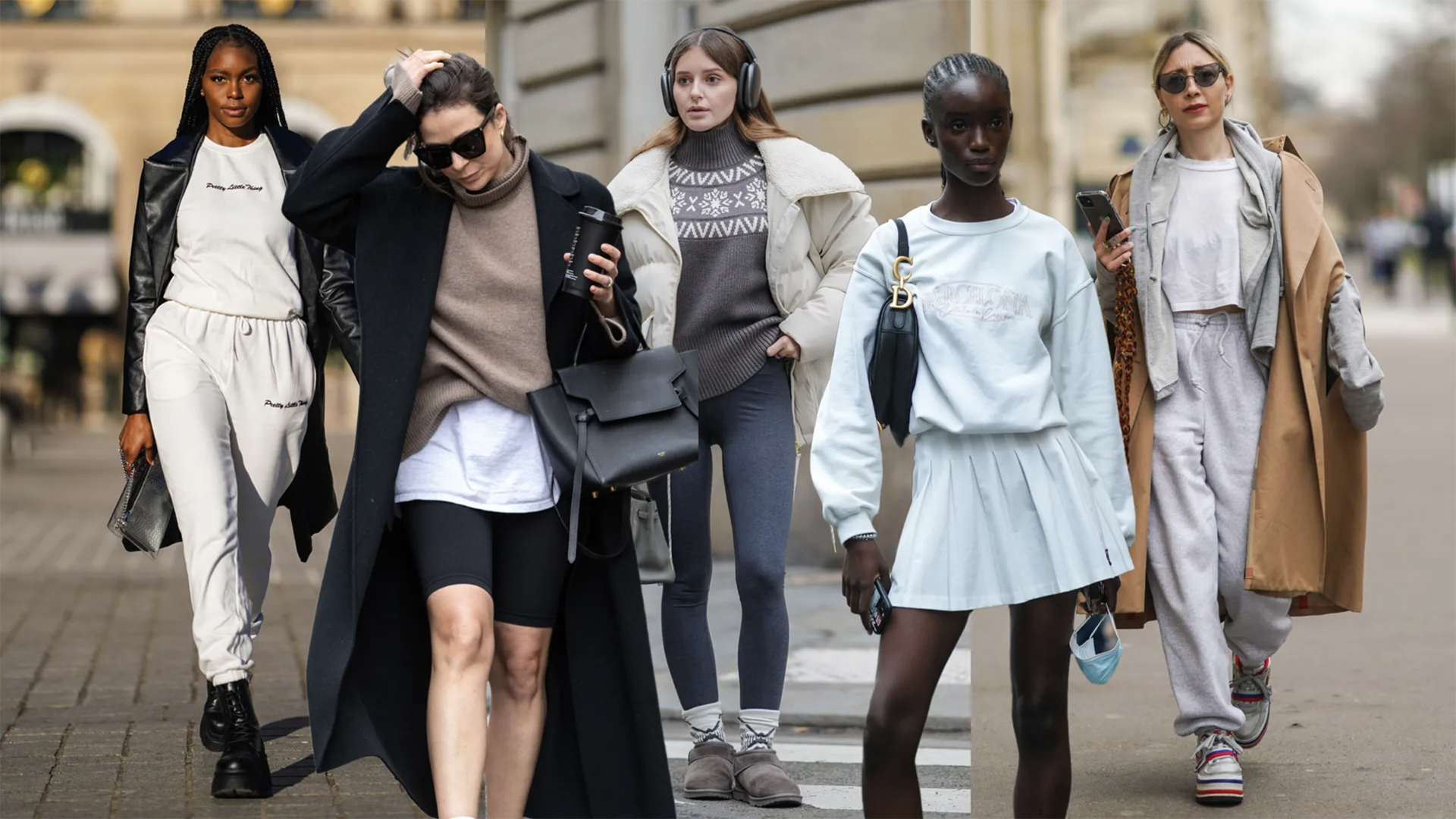
The sofa has left the building. Add a tailored coat, a designer bag, and sunglasses, and the clothes you once wore at home become the clothes you wear out. Dressing down needn’t involve spending less.
I noticed this particularly in America. America produces extraordinary dressers, and New York has plenty of them, but the national enthusiasm for comfort can make an ordinary afternoon look like the aftermath of an evacuation. I say this as a German, which limits my authority considerably. German men have long treated clothing as equipment: practical, weatherproof, and ready for a mountain that never appears. They have improved. The emergency fleece remains on standby.
The French and Italians still make jeans and a shirt look like a choice. Fit, proportion, the right shoes—nothing that necessarily requires a trust fund or an appointment with a stylist. They show something we seem increasingly inclined to forget: casual clothes can look wonderful. Comfort leaves plenty of room for taste.
So how did dressing well become something we need to defend?
We escaped the dress code. Then we got another one.
There was a time when going out involved a visible act of preparation. You changed for dinner, the theatre, a journey, or an evening in the city. In her 1922 etiquette book, Emily Post prescribed a dinner dress for a woman attending an evening performance in New York and a tuxedo for a man. Even sitting in the dark required wardrobe supervision.
Those conventions made distinctions between parts of life. Work differed from home. An evening out differed from an afternoon in. Clothes helped mark the transition. You could anticipate an occasion while getting ready for it, rather than discovering halfway through dinner that you had apparently gone out.
Of course, the old photographs flatter the arrangement. Beautifully dressed people boarding an airplane tell us who could afford to fly, rather than proving that humanity once possessed better manners. Dress codes could enforce class, restrict women, and demand conformity from people whom respectable institutions might still refuse to welcome. An immaculate suit never guaranteed an immaculate character. History is full of well-tailored bastards.
Casual dress offered a welcome escape. Young people wore clothes that allowed them to move, experiment, and express an allegiance their parents might dislike. Jeans and leather jackets carried attitude. A T-shirt could be provocative. Much of what made casual clothing exciting involved thinking quite hard about how you looked.
Then the office needed a version it could approve.
In 1992, Dockers mailed its guide to casual business wear to approximately 25,000 HR managers. The company hadn’t invented dressing down, but it recognized a commercial opportunity in employees wondering exactly what they were now allowed to wear. A trouser company helpfully supplied the answer.
Rebellion had reached the workplace, where it was issued a belt and asked to keep its shirt tucked in. Freedom came in several shades of beige.
The suit loosened its grip, but the appetite for a uniform survived. People still wanted to belong, employers still wanted to regulate appearances, and brands were delighted to sell everyone the appropriate expression of independence.
The privilege of looking as though you don’t care
Silicon Valley gave dressing down a more flattering explanation. Casual clothes could now suggest that their wearer had more important things to think about.
Steve Jobs’s black turtleneck became the most recognizable example. Yet he chose his uniform deliberately, developing it through his relationship with Issey Miyake. As Walter Isaacson’s biography recounts, Jobs appreciated both its convenience and its ability to give him a signature look. The man supposedly beyond fashion had enlisted one of its great designers.
That detail complicates the inspirational lesson. Jobs had made a wardrobe decision and repeated it successfully. His imitators often preferred to think an unremarkable shirt proved an exceptional brain. Apparently, anyone capable of reorganizing humanity could be excused from considering his trousers.
Dressing down also became a power move. An employee might need a suit to establish credibility; the founder could arrive in a hoodie because nobody would send him home. It is easier to disregard expectations when the people doing the expecting work for you.
Research into the “red sneakers effect” has explored how breaking a dress convention can lead observers to infer greater status or competence. Under the right circumstances, looking out of place suggests that you can afford to ignore the rules. The important accessory, then, is other people’s knowledge of who you are. A billionaire looks independent. An unknown applicant wearing the same thing may fail to get the job.
Meanwhile, the distinctions became less obvious. A plain sweater could be ordinary or extraordinarily expensive. A particular sneaker could communicate membership to people who recognized it. The hierarchy remained, with fewer instructions available to outsiders.
We had supposedly stopped judging people by their clothes. Quite a lot of judging continued; it simply required more specialist knowledge.
Looking ordinary has never been so expensive
Luxury brands had no objection to any of this. They could sell a hoodie as readily as a jacket, provided somebody put the right name on it. Sweatpants became something to wear conspicuously to expensive places. The customer could enjoy the comfort of staying home while making sure everyone knew what leaving home had cost.
Sportswear offered an especially agreeable proposition: clothes for being active that you could buy without becoming active. Leggings and performance fabrics accompanied us through shopping, lunch, travel, and the strenuous business of finding somewhere to sit. Exercise remained available as an optional extra.
Streetwear added scarcity. A familiar garment could become an event because it was released in limited numbers, attached to a collaboration, or already being resold for more than its original price. For an allegedly effortless wardrobe, it can take a surprising amount of queuing, refreshing, researching, and competing.
Some of these clothes are beautifully designed and made. Technical fabrics can do useful things; a good sweatshirt is a pleasure; sneakers can finish an outfit perfectly. Their apparent simplicity doesn’t prove that they cost nothing to produce. But a logo or a limited release can give a customer a reason to pay more without giving anyone a better reason to admire the result.
The designer sweatshirt still cannot choose your trousers, improve their fit, or explain why you are wearing those shoes. That requires an eye. A large logo offers a convenient shortcut: people may not admire your taste, but at least they can recognize your expenditure. You can be badly dressed without the humiliation of being mistaken for someone on a budget.
Then the pandemic removed many of the occasions that had kept other clothes in circulation. For people working from home, the wardrobe’s responsibilities could end at the waist. A meeting required a presentable rectangle. The rest was a private matter. When public life resumed, elastic trousers had acquired the considerable advantage of already being on.
What had been convenient became habitual. Work clothes, home clothes, travel clothes, and dinner clothes increasingly overlapped. There is much to enjoy in that freedom. Yet it has also made a deliberate change of clothes seem oddly excessive.
Wear the familiar uniform of expensive sneakers and a hoodie, and nobody needs an explanation. Arrive in a well-chosen jacket, and suddenly you seem to be trying too hard. The person may have spent less money and less time getting ready. Their offense is that they enjoy it.
It is a peculiar convention: we readily accept clothes that advertise what someone can afford, then tease the person who looks as though they have been looking forward to dinner.
Please dress according to your expiry date
Even when someone enjoys clothes, advice is available to discourage them. Much of it begins with the instruction to dress their age.
Apparently, a birthday can make a perfectly good jacket inappropriate. Yesterday it suited you; today it suggests a troubling refusal to accept reality. Who authorized the trousers to check our birthdate?
There is something especially joyless about reaching an age when you might understand yourself better, have a little more confidence, and feel less obliged to seek approval only to discover that you are now expected to express less of yourself. The wardrobe must become discreet just as its owner is becoming interesting.
I prefer Michael Kors’s advice to dress for your body and spirit rather than an age category. In an interview with Jeanne Beker, he rejected the usual prescriptions about what to wear at twenty, forty, or fifty in favor of knowing yourself and what works for you. At least that involves looking at the person rather than consulting a passport.
My own philosophy is simpler: a yoga body beats much of the wardrobe discussion. The way you stand and move, and how easily you feel at home in your body, can do more for a plain shirt than another designer label. I would rather put some of that effort into the person inside it.
That is a preference for movement and physical ease, rather than another entrance requirement for enjoying clothes. There is already enough fashion advice informing people that they must correct themselves before they can get dressed. But the industry’s willingness to sell us an athletic appearance still far outweighs its ability to help us stretch.
The pleasure of someone who knows
All of this becomes more interesting when it leaves the realm of rules and enters ordinary life. My former partner Andrea had wonderful style. At 1.86 meters, with long legs, she certainly had advantages, but height cannot choose an outfit. What made her striking was her judgment. She understood herself visually, and her clothes brought that understanding into view.
She could pair something expensive with something inexpensive and make it hers. The pleasure came from seeing what she had done with it. You noticed Andrea, rather than mentally adding up the labels.
I have mentioned her before because that pleasure stays with you. Having a partner with style adds something lovely to everyday life: you enjoy looking at the person you are with. Their taste surprises you. Going somewhere together becomes more enjoyable because they bring their own sense of the occasion.
We discuss the qualifications for a successful relationship at extraordinary length, yet we rarely mention this small, recurring pleasure. It should. Life already has enough necessary conversations about bills, arrangements, and what needs replacing. It is lovely to look across the table and think, you look wonderful.
Of course partners ask each other for opinions. But “Does this look good on me?” can become a nightly wardrobe referendum when you thought you were going to dinner. What I loved was Andrea’s own eye. I could enjoy her choices without becoming responsible for them. She brought something I hadn’t selected, approved, or expected.
That independence was attractive in itself. Style gave her personality visible form. It made the person I knew familiar and surprising at the same time.
Give the evening a chance
Now I live in rural Thailand, where it is too hot ten months out of twelve and I hardly ever wear a T-shirt. I work on my own, so a video call can be my only reason to dress up. Occasionally, my wardrobe needs Wi-Fi to get going.
Bangkok is another matter. I would never be caught there in shorts, and going into the city is an occasion I enjoy dressing for. The heat hasn’t changed; the situation has. I want different clothes for different kinds of days, and I like the small sense of anticipation that comes with choosing them.
That is what I miss when everything becomes suitable for everywhere. Getting ready can be part of the pleasure. You put on music, choose something you haven’t worn in a while, change the shoes, decide the first pair was better. Before you have left the house, the evening has begun.
And other people can add to that pleasure. We appreciate a beautiful room, flowers on a table, food presented with care. Someone bringing a little visual imagination into the room adds to it, too. It can be as simple as a wonderful color, an interesting jacket, or jeans and a shirt that fit beautifully. Nobody needs to arrive in gala attire.
We have earned a welcome freedom from compulsory formality. It leaves room for much more than dressing as though we might need to lie down. We can be comfortable, individual, playful, elegant, eccentric and occasionally pleased enough about going somewhere to let it show.
There is no need to save everything good for a special occasion until the clothes no longer fit and the occasion has developed other plans. Wear the interesting jacket. Take the good shoes to dinner. If somebody asks why you are so dressed up, “I felt like it” is a perfectly respectable answer.
The sofa will take you back in anything.