
THE DEVIL WEARS PRADA 2
By Thea Elle · MAY 26, 2026 · COUTURE COMMENTARYHOW LUXURY LEARNED TO LOVE THE ALGORITHM
Twenty years ago, Miranda Priestly terrified assistants. The character, played by Meryl Streep in The Devil Wears Prada, was a thinly veiled version of Anna Wintour, the legendary editor of Vogue. At the time, she represented the absolute peak of editorial power: a woman so feared that adults with Ivy League degrees visibly panicked when her car pulled up outside the office.
The Return of Miranda Priestly
The original film arrived at the height of the magazine era, when Condé Nast still felt less like a publisher and more like a small empire with better tailoring. Editors controlled aspiration itself. Fashion magazines were gatekeepers to a world most people would never enter, but desperately wanted to orbit.
Today, Miranda Priestly would not terrify assistants.
She would terrify engagement teams.
That is what makes The Devil Wears Prada 2 unexpectedly fascinating. Beneath the nostalgia, the coats, the handbags, the martinis, and the fluorescent Manhattan ambition, the sequel quietly reveals something much larger than fashion:
Fashion no longer controls culture.
Platforms do.
The original film was about editorial dictatorship. The sequel is about what happens after the dictatorship gets acquired by venture capital, filtered through TikTok, optimized for engagement, and forced to apologize on social media.
Miranda Priestly no longer rules from a corner office. She rules from inside a metrics dashboard.
And somehow that feels colder.
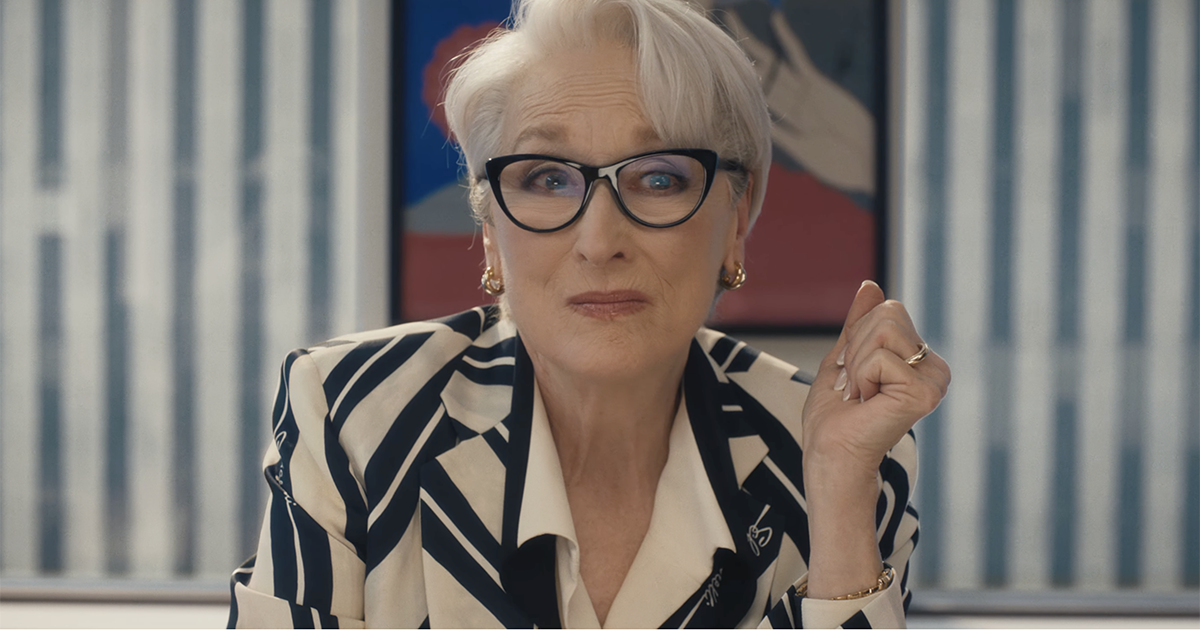
Miranda Priestly no longer rules fashion through fear alone. Now she rules through visibility, metrics, partnerships, algorithms, and the quiet terror of becoming irrelevant.
Luxury Learns to Speak Middle Class
The film contains one exchange between Ann Hathaway as Andy Sachs, a journalist, and Emily Blunt, as Emily Blunt a senior executive at DIOR, that accidentally explains the entire modern luxury economy better than most business books.
“Luxury retail is the only sector in the fashion business that makes money.”
“Twenty years ago, a hundred-dollar handbag was considered a splurge. Brands like us changed all that. Use some logos and branding, because everyone understands, everyone gets it, that your bag, your scarf, your perfume, your umbrella, it tells the world who you are. What you care about. Our customers wouldn’t dream of going out without our three-thousand-dollar tote. It’s bringing beauty and design to everyone.”
Luxury stopped selling objects a long time ago. European luxury conglomerates are industrializing aspiration. It now sells social legibility. The handbag became less of an accessory than a passport stamp for class anxiety. A portable billboard for belonging. The modern customer no longer buys leather. They buy narrative.
And then comes the perfect punchline.
“Not everyone has three thousand dollars.”
“Have you heard of Christmas?”
There it is. The entire Luxury Industrial Complex in one sentence: debt-funded aspiration wrapped in ribbon.
The Death of Editorial Cool
One of the strangest things about the sequel is that Miranda Priestly almost feels vulnerable. Not morally. Institutionally.
In the original film, Miranda represented unquestioned authority. A terrifying empress floating above ordinary humanity in icy certainty. Now she has HR complaints. Now she has backlash cycles. Now she has problematic partnerships to manage and social-media scandals to survive.
That shift matters.
The sequel’s fictional “Speed Fash” controversy — essentially a luxury magazine partnering with a Shein-like empire — is funny precisely because the distinction between luxury and mass exploitation has become increasingly difficult to maintain.
Luxury still speaks the language of craftsmanship while operating at an industrial scale. The fantasy remains artisanal. The supply chain often does not.
And the audience knows it now.
That is the real crisis facing luxury culture. Not counterfeit bags.
Counterfeit morality.
For years, fashion survived by maintaining distance. That was the magic trick. The velvet rope. The mystery. The feeling that somewhere, behind mirrored elevators and private fittings, a small elite group still controlled taste itself.
Then social media arrived and vaporized distance.
Now everybody has an audience. Everybody has a front-row seat. Everybody is a critic. Everybody is a brand.
The hierarchy did not disappear. It became algorithmic.
Make an icon yours.
Shop Preloved Luxe now.
Vogue in the Age of TikTok
The sequel also captures something else almost accidentally: the collapse of editorial authority into platform capitalism.
Today, a teenager on TikTok reviews runway collections before the limousine even leaves the venue. Influencers replace editors. Comments replace criticism. Algorithms replace taste. Runway magazine survives not through authority alone, but through engagement metrics, scandal management, billionaire funding, and platform visibility.
In other words, fashion finally became Silicon Valley.
And yet the fascinating part is that people still desperately want Vogue’s approval.
That may be the strangest twist of all.
Even in a culture drowning in content, authority itself remains luxurious. Not the bag. Not the shoe. Not even the price.
Attention.
Curated attention.
That is why fashion houses increasingly behave less like ateliers and more like media companies with leather departments attached.
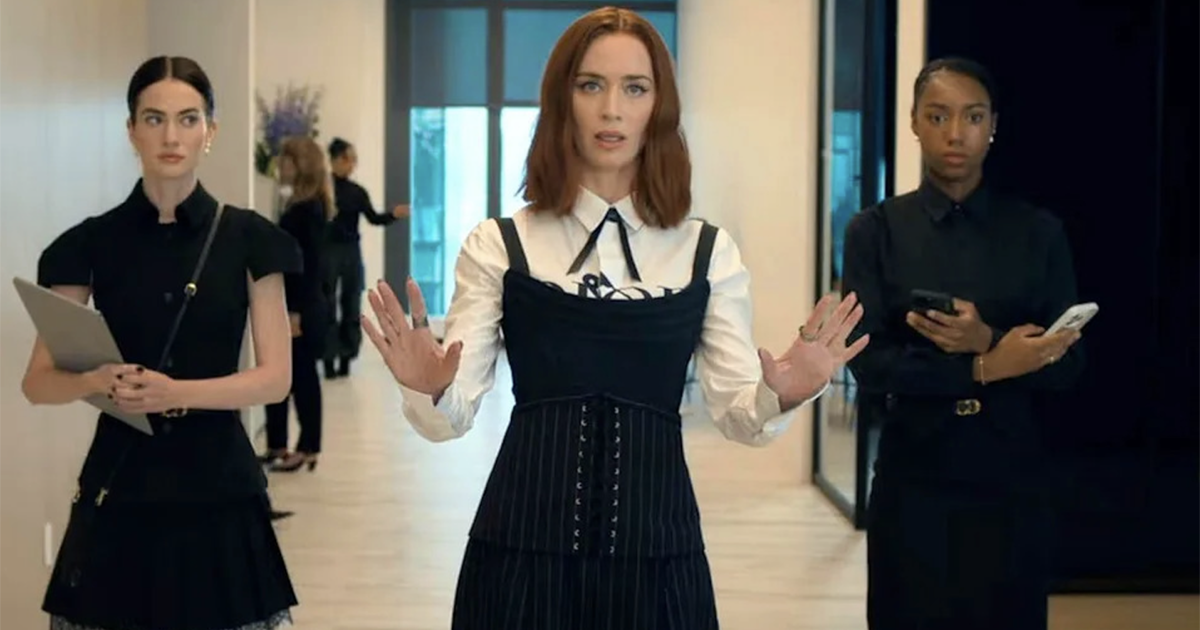
Emily Blunt enters The Devil Wears Prada 2 like luxury itself in 2026: perfectly composed, highly optimized, slightly terrifying, and fully aware that branding replaced belief a long time ago.
The AI Problem
And then comes AI, hovering underneath the film like an approaching weather system.
The sequel barely addresses it directly, but its presence is everywhere. Once AI can generate perfect campaigns, perfect editorials, perfect influencers, perfect fantasy vacations, perfect Parisian apartments, and perfect faces, luxury loses one of its oldest powers:
the monopoly on aspiration imagery.
If everybody can simulate luxury instantly, then actual luxury must migrate elsewhere — toward private clubs, inaccessible experiences, invitation-only worlds, and increasingly absurd forms of exclusivity.
The richer the digital fantasy becomes, the more valuable the physical rarity becomes.
That is the next phase.
Not luxury products.
Luxury access.
Curated Finds. Timeless Style,
Thoughtfully. CRIS & COCO.
When the Entire World Becomes Fashion
The original film asked:
“How much humiliation are you willing to endure to enter the world of fashion?”
The sequel asks something darker:
“What happens when the entire world becomes fashion?”
When identity itself becomes branding.
When visibility becomes labor.
When taste becomes algorithmic.
When journalism becomes content.
When handbags become investment vehicles.
When aesthetics become economic policy.
The unsettling thing is that the sequel no longer feels exaggerated.
That is why it works.
And that is why it is funny.
The satire finally caught up with reality.
Editorial Luxury Awaits